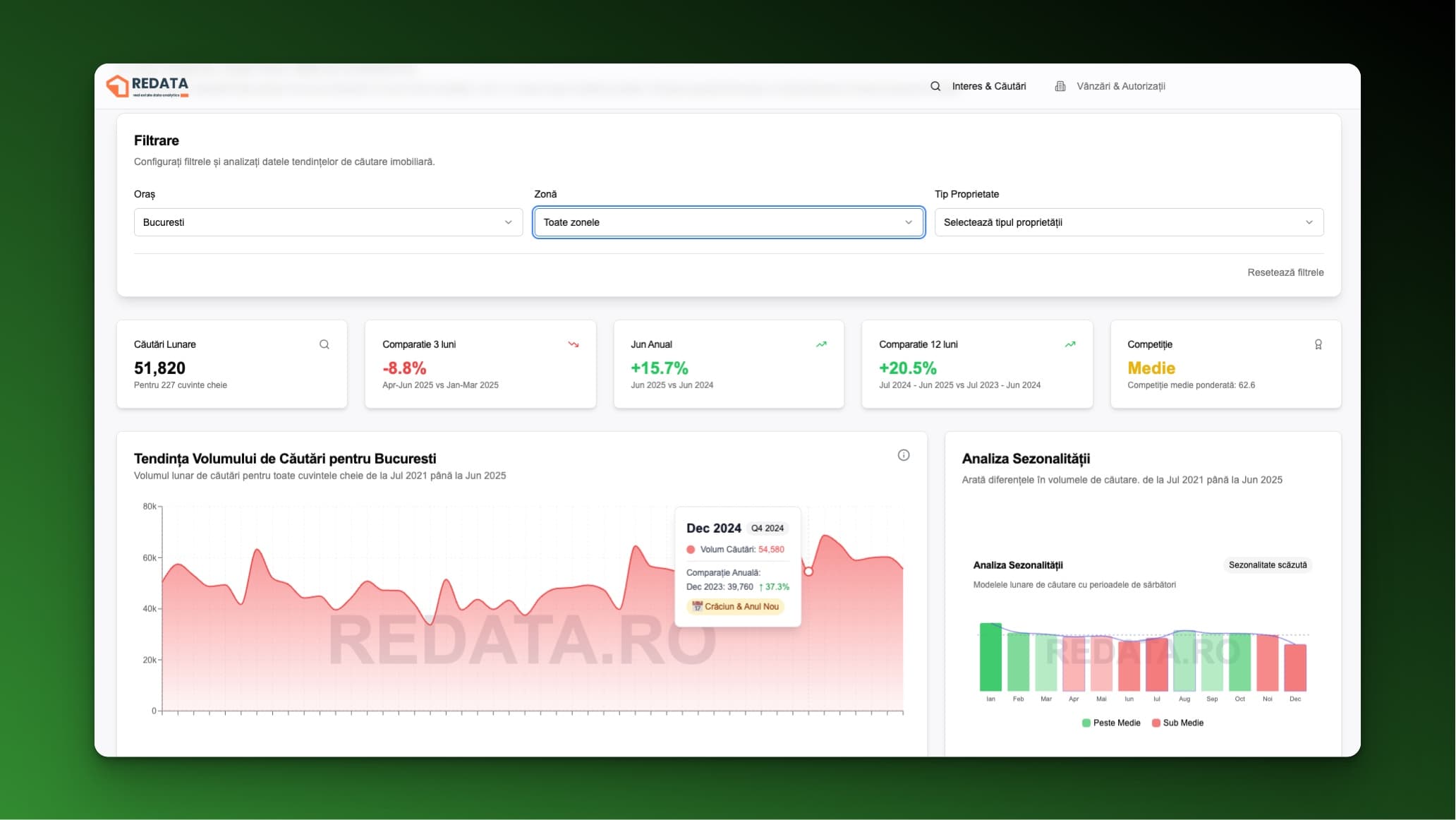
Artificial intelligence (AI) promises to revolutionize the real estate industry, yet it cannot replace the essential human element in the decision-making process. Still, you can already feel how the way we market residential developments and engage with potential buyers is shifting dramatically.
This guide shows you how to practically adopt AI in real estate marketing -- from content generation and design tools, to automated advertising and intelligent CRM.
How AI is transforming real estate
The property market is undergoing deep changes driven by emerging technologies. Recent studies reveal massive enthusiasm among professionals: over 70% of real estate companies anticipate a major impact from artificial intelligence on industry processes, while only ~2% believe these technologies would significantly reduce headcount. In other words, AI is seen as an ally, not a replacement.
Adoption varies by region:
-
Asia already uses smart building solutions to optimize energy consumption and reduce maintenance costs (e.g., EcoStruxure Building Advisor). These machine learning-based systems identify anomalies and prevent failures before they happen.
-
Europe and North America are experimenting with virtual agents and chatbots that handle agents' repetitive tasks, freeing people to focus on advisory and negotiation. Nearly three-quarters of real estate experts in EMEA believe AI will have a significant or revolutionary impact on the industry.
Regardless of region, the human side remains critical: trust, empathy, and relationship-based decisions simply cannot be fully automated.
The Romanian context
In Romania, the AI revolution is just beginning to make its presence felt, but notable initiatives already exist. The VAUNT platform has integrated an AI module that anonymously monitors visitor behavior on real estate websites and generates profiles and recommendations for agents. This module shows what types of properties attract a lead's attention, estimates their level of interest, and suggests next steps.
On the international stage, solutions like MAIA (Mogul Artificial Intelligence Agent) from Singapore scan tens of thousands of listings and initiate WhatsApp conversations with sellers or buyers. While you sleep, a digital "agent" finds matches for your clients, recommends properties, and schedules viewings. Organizers of the "Real Estate Accelerator" conference in Timisoara emphasize that such virtual agents won't replace traditional agents -- they'll free them from repetitive tasks.
An interesting direction is sustainability: developer Global Vision announced in 2024 an AI-powered platform that monitors ESG parameters (environmental, social, governance) for buildings in their portfolio. The algorithms analyze energy consumption and carbon footprint in real time, contributing to operational efficiency optimization.
AI tools for residential development marketing
The true value of artificial intelligence emerges when applied concretely to your daily work. Below you'll find categories of tools and use cases that can transform your marketing strategy.
AI for copywriting and content
Property descriptions, blog articles, social media posts, and follow-up emails are all time-consuming. Large language models (GPT-type) can generate polished text in seconds, tailored to any desired tone. How can you use them?
-
Auto-generated apartment descriptions -- feed in the key property data, and AI produces copy that sells the dream of the perfect home. You can fine-tune the draft manually, but you start from a solid foundation.
-
Social media and blog content -- AI can suggest Instagram captions, short-form Facebook/LinkedIn posts, or even article ideas. The more details you provide about your brand and audience, the more relevant its suggestions become.
-
Time savings -- agents using content chatbots report up to 59% faster response times and 138% increases in generated leads (based on data from an international CRM provider). Rapidly produced content enables prompt responses to client inquiries, boosting conversion rates.
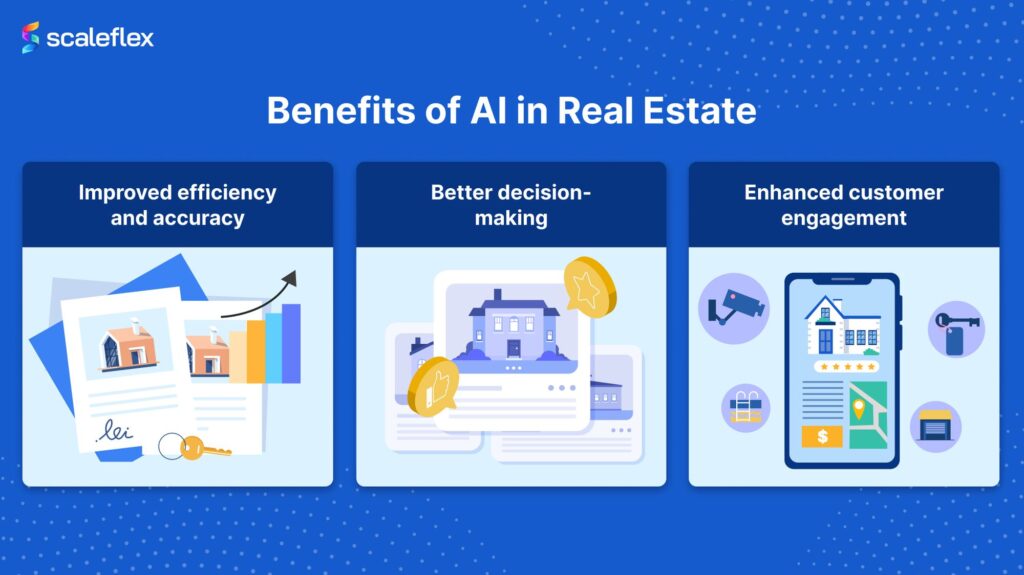
AI in visual design: images, graphics, and virtual staging
A great image sells faster than a long text. AI brings speed and flexibility to visual marketing that would be impossible to achieve manually.
-
Virtual staging -- selling an unfurnished apartment? You can digitally "furnish" the space in minutes. Virtual staging software applies realistic furniture and decor over empty photos, helping potential buyers envision what their home could look like. Statistics (from the US) show that home staged properties (physical or virtual) sell for 5--25% above listing price, and 85% of buyers' agents say good staging helps clients picture themselves in the home.
-
Automated photo editing -- algorithms can adjust brightness, contrast, or perspectives of property photos in seconds. The result is a professional photo set without needing human editors.
-
Promotional material generation -- platforms like Canva offer AI-generated templates for flyers, social media posts, or banners. Specify your needs ("modern open house flyer") and receive varied designs you can refine.
-
Fast renders for early-stage projects -- AI-assisted tools (such as certain Lumion or Matterport features) can generate or enhance 3D renders in record time. If you're selling off-plan, you can showcase a realistic image of the project while it's still in the planning phase.
Expressive photography helps potential clients visualize the atmosphere. Virtual staging or automated editing can quickly transform raw shots into compelling images.
Smart automation in online advertising (Meta & Google Ads)
Facebook/Instagram and Google ads are the engine behind lead generation campaigns. These platforms have already integrated significant AI capabilities, and marketers should take full advantage.
-
Automated audience targeting -- Meta's Advantage+ Housing Ads feature lets the algorithm identify the audience segments most likely to engage. You set the objective (e.g., leads), and AI optimizes delivery based on user behavior.
-
Creative generation and optimization -- Google's responsive search ads or Meta's dynamic campaigns automatically combine headlines, descriptions, and images to find the best-performing variation. There are also tools that suggest headlines and create banner variations. IDC studies found that generative AI delivers an average ROI of $3.7 for every dollar invested -- some companies reach 10x.
-
Automated bidding and budget management -- smart bidding strategies adjust bids in real time based on conversion probability. If someone searches for "3-bedroom apartment Aviatiei," the algorithm bids more aggressively than for a generic search. The result: more conversions on the same budget, or a lower cost per lead.
-
Scheduling and delivery optimization -- AI can allocate budget toward the highest-performing time slots (e.g., late evening) and reduce spend during weaker moments.
-
Chatbots integrated into ads -- click-to-message ads can open a Messenger conversation with a chatbot. Leads answer qualification questions directly in chat -- no lengthy forms -- and the data flows straight into CRM.
Intelligent CRMs and AI-powered lead qualification
Ads drive traffic, but deals are won in how you manage your leads. Modern AI-powered CRMs do far more than store contacts -- they prioritize, qualify, and communicate with leads automatically.
-
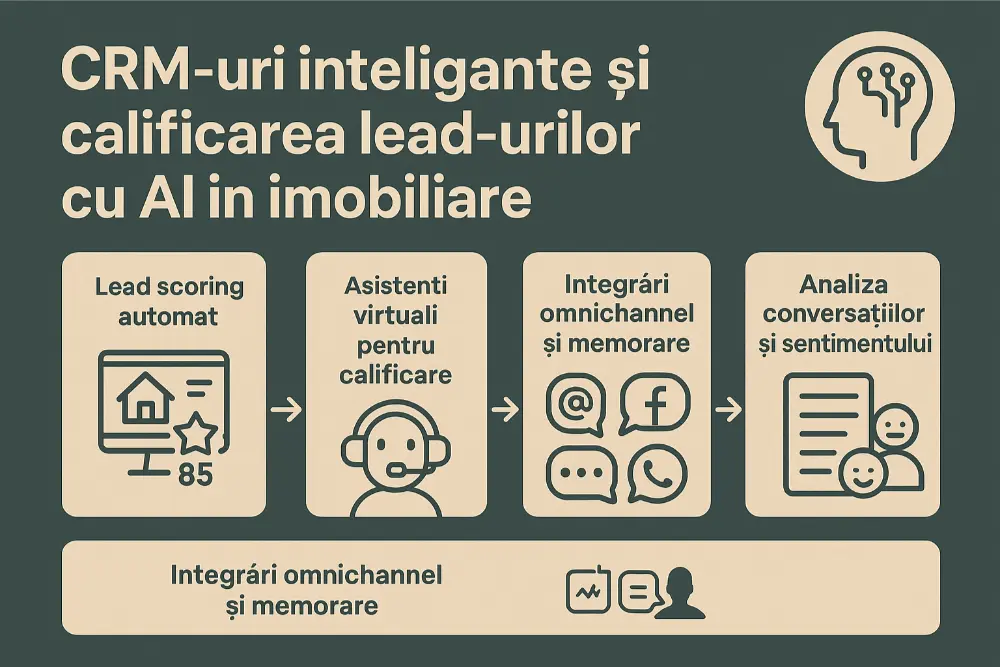
Automated lead scoring -- algorithms analyze each lead's behavior (email opens, site visits, survey responses) and assign a score. This lets you focus your effort on the most promising prospects.
-
Virtual assistants for qualification -- chatbots or voicebots can handle qualification conversations 24/7. They ask the standard questions (budget, property type, purchase timeline) and schedule viewings. At 10:30 PM, when no one on the team is working, a website visitor can still get answers and book a viewing for the next morning. The result is a shorter time-to-qualification and greater buyer satisfaction because their questions get answered faster.
-
Omnichannel integration and memory -- modern systems unify messages from email, WhatsApp, Facebook, and website chat. Agents see the full conversation history in one place, and clients never have to repeat themselves.
-
Conversation and sentiment analysis -- some providers use AI to transcribe and analyze calls, classifying leads based on enthusiasm or hesitation. Agents instantly know who's worth pursuing.
Automating follow-up and lead nurturing
Buying a home isn't an impulse purchase; weeks or months can pass between first interest and contract signing. A well-configured AI system keeps the conversation going without burning out your team.
-
Multi-channel drip campaigns -- set up email/SMS sequences that trigger automatically based on lead actions. For example, Day 1 -- send the brochure; Day 3 -- short SMS; Day 7 -- video walkthrough; Day 14 -- feedback call. Content can be AI-generated and personalized with the lead's name and preferences.
-
Smart notifications for agents -- if a lead spent 5 minutes on the 100 sqm apartment model page, the CRM creates a task for the agent: "call them and highlight the generous space." No one gets forgotten.
-
Voicebots for follow-up -- AI phone agents can automatically call hundreds of leads with interactive messages, collecting responses and booking appointments. A case study shows a 70% reduction in human agents' workload and a 30% increase in leads captured outside business hours.
-
Long-term nurturing -- if a lead postpones their decision, the system places them in a reactivation flow. After a few months, they receive personalized messages ("Remember that apartment with the garden? We have a special offer for you"), significantly increasing the chances that the prospect returns.
Case study: an automated funnel in action
To see how all the pieces fit together, here's a hypothetical scenario inspired by real-world examples. Developer Omega Residence is launching a multi-building complex in the metropolitan area and partners with ADACITY for an AI-driven strategy.
-
Lead generation -- ADACITY sets up Facebook and Google campaigns using intelligent targeting. 50 ad variations are created (images, video, carousels), and Meta's AI runs Advantage+ to find the winning combinations. Within two weeks, ~200 leads are generated, with cost per lead 30% lower than previous campaigns.
-
Automated qualification -- as soon as a lead fills out the form, a WhatsApp chatbot asks whether they prefer two or three bedrooms and what their budget is. Leads receive automatic scores; human agents get a list of the "top 20" leads and contact them the same day. The voicebot calls the remaining leads outside business hours so no opportunity is missed.
-
Viewings and follow-up -- after each viewing, the system automatically sends a personalized email highlighting the benefits discussed (e.g., large balcony or parking spot). If there's no response within 48 hours, a reminder SMS goes out. The result: interest reconfirmation rate climbs to 70%.
-
Closing sales -- when clients are ready to commit, reservation contracts are auto-generated with data pulled from the CRM. The sales team focuses on actual consulting, and hours spent on administrative tasks drop by 50%. Within 60 days, 15 pre-sale agreements are signed -- an excellent result without expanding the team.
This example demonstrates how an intelligent funnel can turn a high volume of leads into a smooth sales process, with minimal effort from agents.
Benefits and risks of using AI in marketing
Key benefits
-
24/7 availability and instant response -- chatbots and voicebots reply in seconds, regardless of the hour. You'll never lose leads because you didn't respond in time.
-
Scalability and productivity -- a single AI agent can handle tens or hundreds of conversations simultaneously, expanding team capacity without additional hires. McKinsey analyses show AI can boost productivity by up to 40% in certain activities.
-
Consistency and error reduction -- automated systems deliver accurate information every time, building trust and eliminating human mistakes.
-
Data analysis and insights -- AI uncovers patterns and delivers data-driven recommendations, helping you make informed decisions (e.g., which apartment types are most in demand during a given period).
-
Personalization at scale -- although automated, communication can be highly personal thanks to collected data. Each lead can follow a different path through the funnel based on their behavior.

Risks and challenges
-
Data protection and privacy -- AI works with personal data. You must comply with GDPR and obtain clear consent. Lack of transparency can erode trust.
-
Inaccurate responses -- if systems aren't kept up to date, they may provide incorrect information (e.g., an already-sold apartment). Human oversight is essential.
-
Lack of genuine empathy -- a robot can't understand buyers' anxieties the way a human agent can. Always offer the option to speak with a real person.
-
Team learning curve -- employees need training to use the new tools effectively. Resistance to change can slow adoption.
-
The "black box" dependency -- handing too much control to AI can cost you visibility into decisions (e.g., why a certain campaign bids more aggressively). Constant monitoring is essential.
-
Risk of over-automation -- if you overdo automated messaging, clients may feel they're only talking to robots. Maintain a healthy balance between automation and human interaction.
Conclusion: why you should start now and how ADACITY can help
Artificial intelligence is no longer a sci-fi concept -- it's a daily reality in real estate marketing. Younger generations expect fast, personalized responses; a chatbot on your website has become the norm. Companies that adopt AI early gain a clear competitive edge. Plus, the sooner you start, the more time your systems have to learn and optimize.
ADACITY can guide you on this journey:
-
Tailored consulting -- we analyze the specifics of your residential project and identify where AI delivers the greatest impact (lead generation, follow-up, budget optimization, etc.).
-
Full technical implementation -- we configure intelligent campaigns on Meta/Google, develop chatbots and voicebots, integrate your CRM, and automate communication workflows.
-
Training for your team -- we provide training sessions so your agents understand how the tools work and when to step in.
-
Ongoing optimization -- we monitor performance, fine-tune messaging, update knowledge bases, and help you interpret reports, so AI becomes a trusted long-term ally.
Ultimately, the goal isn't to replace people -- it's to give them superpowers. AI takes over the time-consuming routines, freeing you to invest your energy in client relationships and closing deals. The future of real estate is already here -- seize it now and look forward to the calls that truly matter: the ones where clients say, "Yes, I want it!"