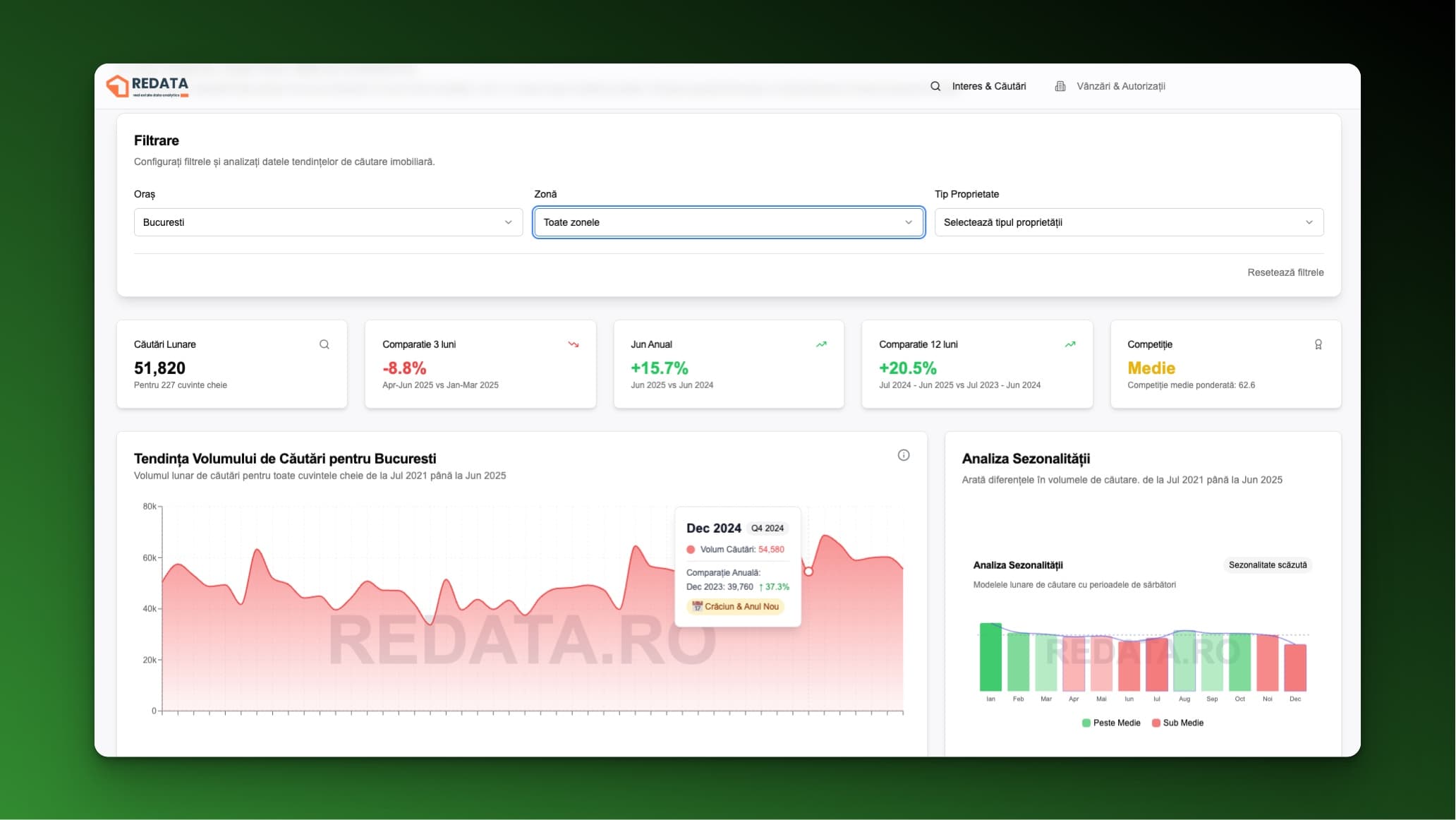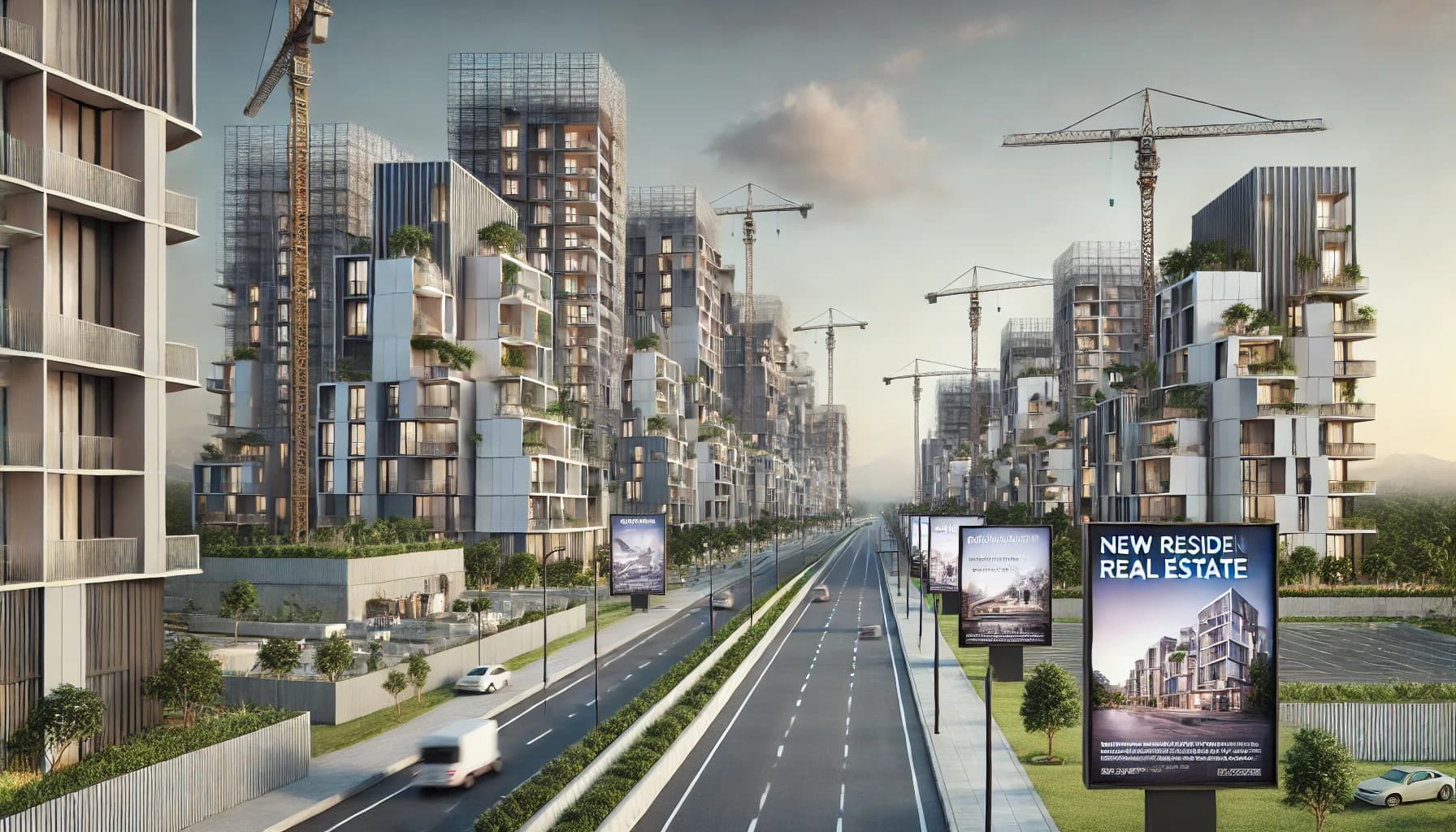
In 2026, real estate marketing is no longer about being seen by as many people as possible, but about being found by the right buyers: on Google, on mobile, and increasingly in AI-generated answers. The market no longer forgives improvisation: roughly 160,000 apartments were transacted nationally in 2025, about 5% fewer than in 2024, according to ANCPI data.
Fewer transactions and rising prices mean projects compete directly for every real buyer. We rewrote this guide for 2026 with fresh market data, the new advertising platform rules, and a new chapter on showing up in AI search engines.
In short
2026 is a market of selection, not momentum: buyers compare more projects before calling, and the brand plus the online experience decide who gets the lead.
The mix that sells a residential development: a fast mobile website, paid campaigns on Meta and Google, portals for visibility, video for trust, and your own database.
New in 2026: buyers ask ChatGPT and Google AI Overviews about neighborhoods and projects. If your project doesn't appear in those answers, you lose demand you never see in any report.
1. What does the Romanian real estate market look like in 2026?
Demand exists, but it selects: transaction volume fell, prices rose, and new supply keeps coming. For a developer, this means projects compete with each other harder than in the boom years.
The numbers that define the context:
Roughly 160,000 apartments transacted in 2025 nationally, about 5% below 2024, according to ANCPI statistics.
Housing prices rose 6.6% in Q3 2025 year over year, above the EU average of 5.5%, according to the Eurostat house price index.
31,678 building permits for residential buildings were issued in the first ten months of 2025, up 4.1% versus 2024, according to INSSE. New supply is growing, so competition between projects is growing.
Financing is getting cheaper slowly: the IRCC index published by the National Bank of Romania dropped to 5.58% for the quarter applicable from April 2026, after the peaks of previous years.
KEY TAKEAWAY: in a market with falling transactions and growing supply, the marketing budget doesn't get cut, it gets reallocated: from channels that bring volume to channels that bring qualified, measurable leads.
2. How do you build the marketing strategy for a residential project?
A real estate marketing strategy is the plan that connects the sales target (how many units, in how much time, at what average price) to channels, budgets, and messages. Without this plan, the budget goes to channels chosen out of habit, not calculation.
The steps are the same as five years ago, but the execution standard has risen:
Market and area analysis. Prices of comparable projects, available stock, sales pace in the area. If the area demands mid-range apartments, an ultra high-end project will still sell, but at a much higher marketing cost per unit.
Defining the target audience. Age, income, motivation (first home, upgrade, investment) and, important for 2026, how they search: portals, Google, social media, or directly in AI apps.
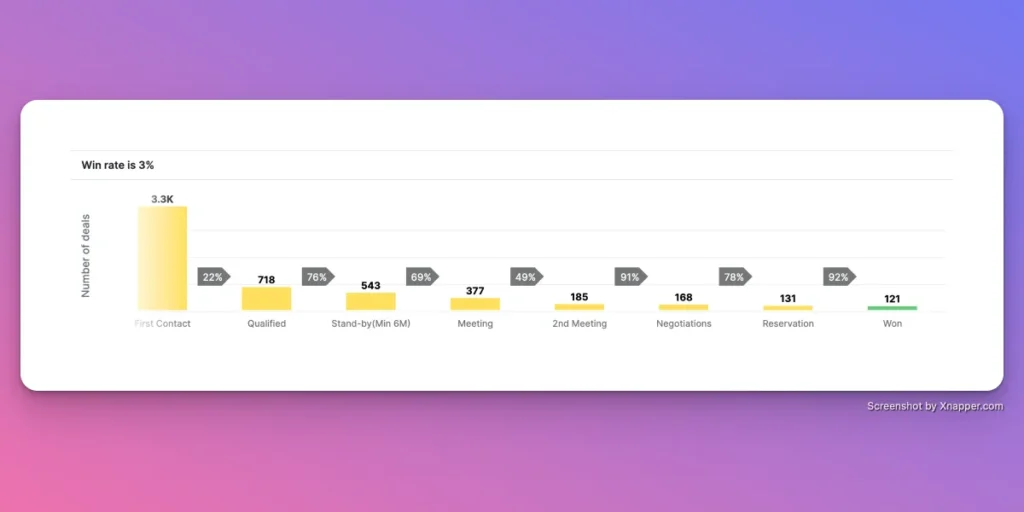
Marketing objectives tied to sales. The number of qualified leads needed per month results from the conversion rate from lead to viewing to reservation, not the other way around.
Choosing the channels. The standard mix for residential: paid campaigns, your own website, portals, social media, email and, depending on the project, outdoor and PR.
A plan and budget on a calendar. With clear decision thresholds: what you stop, what you scale, and based on which indicators.
Across the projects managed at ADACITY, marketing budgets for residential developments have typically ranged between 0.5% and 1.5% of total sales value, depending on location, segment, and the desired sales pace. Below that range, sales don't stop, but they stretch over a much longer period.
The starting moment matters as much as the budget. We covered the topic in detail in our article on when to start marketing a residential project.
3. Why does the project website remain the center of all marketing?
Because every channel sends people to the same place, and that's where a visit becomes a lead, or doesn't. According to the NAR Profile of Home Buyers and Sellers 2025, 52% of buyers found their home online, and 70% used a phone or tablet during their search.
The minimum standard in 2026: fast loading on mobile (Google's Core Web Vitals threshold is an LCP of at most 2.5 seconds), prices or price ranges displayed, downloadable floor plans, and a short contact form. A slow site or one without prices doesn't „qualify" leads, it just loses them.
Which platform should you choose for the project website?
We get this question often from clients and partners. For residential developments and presentation websites, our recommendation remains an existing CMS (WordPress, Webflow, or equivalent) with a front-end tailored to your brand, not a custom backend.
You get 99% of what you need at a fraction of the cost, and the marketing team can update content on its own, without depending on developers.
If the project needs a new website or a serious optimization, see our real estate web design service.
4. Do real estate portals still work in 2026?
Yes, but as a source of visibility and validation, not as the only sales channel. Imobiliare.ro, Storia, and OLX remain the places where buyers actively compare, so a project's absence raises questions.
 To get the most out of portals:
Use the developer accounts and project pages, not scattered individual listings.
Fill in everything: good photos, floor plans, finishes, prices. Incomplete listings get filtered out quickly by users.
Treat the portal as an entry point: send traffic to the project website, where you control the message and the measurement.
5. What social media content sells apartments in 2026?
Short videos and proof of construction progress. The main role of organic content is not direct lead generation but building trust: the buyer who has watched the construction site for six months calls far more ready to reserve.
Formats that consistently work for residential:
Construction progress, published monthly, in the same recognizable format. It's the most credible content a developer can publish.
Apartment video tours, filmed simply and vertically, for Reels and TikTok.
Neighborhood content: access, schools, infrastructure under development. It answers buyers' real questions.
Client testimonials from previous projects, with real names and faces.
For a complete content strategy and channel management, see our real estate social media service.
6. How do you set up paid campaigns to generate qualified leads?
Split the budget by intent: Google Ads captures active demand (people searching for „new apartments" plus the area), while Meta Ads builds and converts demand that isn't actively searching yet. TikTok Ads remains a channel worth testing for projects targeting buyers under 35.
The vast majority of real estate projects coordinated by us at ADACITY have been sold with over 70% of leads coming exclusively from online advertising channels.
Platform rules have changed significantly since the 2023 edition of this guide. Housing ads on Meta fall under the special „housing" ad category: no targeting by age, gender, or detailed interests, no classic lookalikes, and a mandatory minimum radius for geographic targeting.
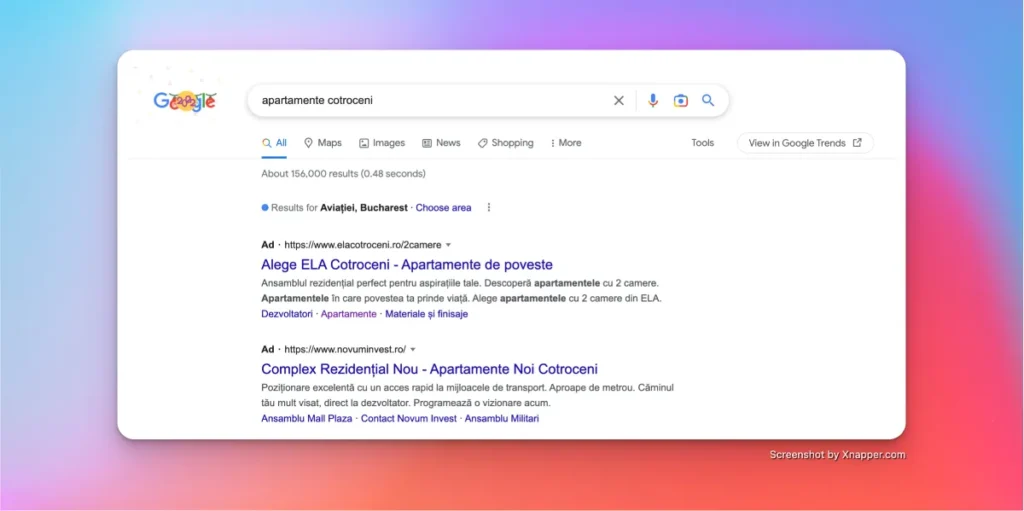
KEY TAKEAWAY: in the housing special ad category, the creatives and the landing page do the targeting, not the audience settings. The message, the displayed price, and the images decide who clicks, so lead quality is optimized through content, not targeting options.
We wrote separate guides for Facebook Ads for real estate and Google Ads for real estate, and if you want an audit of your existing campaigns, see our lead generation service.
7. How does your project show up in ChatGPT and Google AI Overviews?
This is the chapter that didn't exist in previous editions of this guide. GEO (Generative Engine Optimization) means optimizing your content so that AI engines cite it when answering buyers' questions.
The shift is already measurable: ChatGPT passed 900 million weekly active users in February 2026, according to figures published by OpenAI and reported by TechCrunch, and BrightEdge measurements show Google displaying AI Overviews on nearly half of monitored searches. Questions like „is it worth buying an apartment in area X?" now get a generated answer with a few cited sources.
What you can concretely do for a residential project:
Publish pages that answer buyers' questions directly (price, phases, finishes, neighborhood), with frequently asked questions sections.
Add structured data (schema.org) for the project, articles, and FAQ, so AI engines can extract the information correctly.
Include figures, sources, and verifiable data in your content. AI engines preferentially cite content with statistics and named sources.
Keep reviews and Google Business information up to date, because AI answers use them for local questions.
KEY TAKEAWAY: in Romania, almost no developer optimizes for AI search yet. Whoever builds citable content for their area and segment now will be the AI's standard answer in the coming years, just as the first SEO-optimized websites dominated Google for a decade.
We covered using AI in real estate marketing at length in our AI for real estate guide.
8. What role do email marketing and your own database still play?
Email marketing remains the cheapest channel to people who already know you, and your own database is the only channel you fully own. For developers with phased projects or long-term plans, the database becomes a sales asset: satisfied clients from previous projects buy into new ones as investments.

The concrete benefits of your own list:
You announce launches and price stages directly, without paying for reach and without algorithms in between.
You use the list for retargeting and advertising audiences, within the limits allowed by the housing category.
If a social platform goes down or changes its rules, the list remains yours.
9. How do you use traditional marketing and PR in the mix?
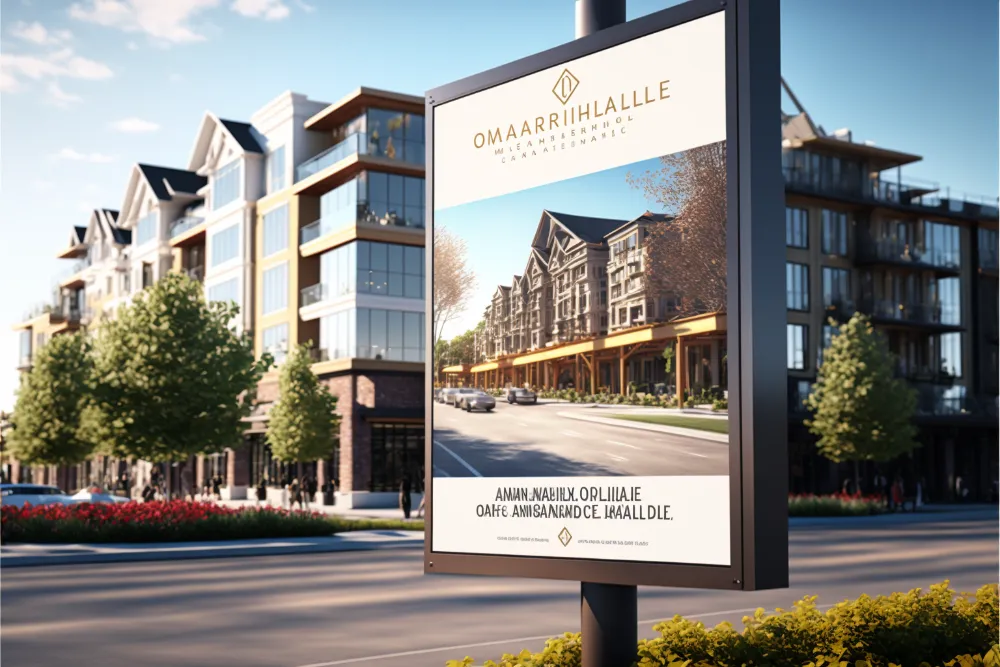
As a local amplifier for awareness, not as the main lead generator. Outdoor, events, and PR work best when online campaigns are already running and can capture the demand they generate.
Short rules for each:
Outdoor: place it in the project's area and on the target audience's routes, with a short message, large fonts, and strong contrast. Measure with dedicated phone numbers or QR codes on each placement.
Events and open houses: organize them at completion and at phase launches. The existing community brings friends and relatives, the cheapest qualified leads.
PR and influencers: choose partners relevant to the project's audience and give them real access to the homes. A press release every few months keeps the project in the news.
10. How do you manage reviews and the client relationship after the sale?
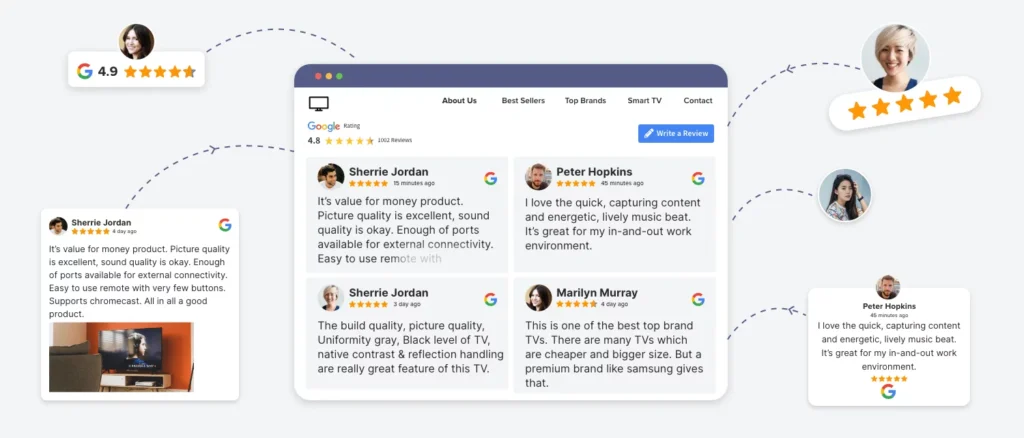
Reviews have become part of the sales process, not just reputation. According to the BrightLocal Local Consumer Review Survey, 71% of consumers regularly read online reviews when evaluating local businesses, and 83% read them on Google.
For a residential brand, the basic rules:
Reply to all reviews, positive or negative. The public reply is read by the next buyers, not just the review's author.
Offer concrete solutions to the problems raised. A negative review resolved publicly builds more trust than a generic positive one.
Ask for reviews systematically at handover, when satisfaction is highest. A simple loyalty program (pre-sales access, referral benefits) makes existing clients a sales channel.
Frequently Asked Questions
How much does marketing cost for a residential development?
Across the projects managed at ADACITY, budgets typically range between 0.5% and 1.5% of the project's total sales value, depending on location, segment, competition, and the desired sales pace. The budget is calculated from the number of qualified leads needed, not as a fixed monthly amount.
When should I start promoting the project?
Before sales open, ideally as soon as the project is permitted: the brand, the website, and the database are built in the months before launch, so a waiting list already exists when sales begin.
Which channels generate the most leads for a residential project?
Paid campaigns on Meta and Google usually generate the largest share of leads: in projects coordinated by ADACITY, over 70% of sales came from leads generated exclusively online. Portals and organic content add volume and validate the project.
Are real estate portals still worth it in 2026?
Yes, for visibility and validation: buyers actively compare projects there. They can no longer be the only channel though, because you don't control the message, the data, or the cost per lead the way you do on your own website.
What is GEO (Generative Engine Optimization)?
GEO means optimizing your content so that AI engines (ChatGPT, Google AI Overviews, Perplexity) cite it in the answers they generate for buyers' questions. In practice: content that answers questions directly, structured data, and figures with verifiable sources.
Conclusions
Three rules that sum up this guide:
If the budget is limited, the order of investment is: a fast website with displayed prices, paid campaigns on Meta and Google, reviews. The other channels add to these, they don't replace them.
If the project has multiple phases or you develop long term, invest early in the brand and your own database: every next phase sells faster and cheaper.
If you want a real advantage in 2026, prepare for AI search now, while local competition is nearly nonexistent. The citable content you publish today becomes tomorrow's standard answer.
At ADACITY we've been doing marketing for residential projects in Romania for over 9 years. If you want to talk about your project, write to us here and let's see together how you reach your sales targets.