In the digital age, effectively marketing real estate properties requires more than on-site banners or a basic online presence. Google Ads has revolutionized how real estate agencies and residential developers attract potential buyers. Through Google Ads, you can target specific audiences with precision, using sophisticated data about user behaviors and interests.
Google Ads enables the creation of customized campaigns that reach potential buyers at the right moments — whether they're browsing the web, checking their Gmail, or watching videos on YouTube. The platform's flexibility allows for a range of ad formats, including static images, image carousels, and videos, each offering unique advantages in capturing audience interest.
Developers and real estate agents can benefit from Google Ads campaigns through proper setup and the use of advanced targeting strategies. This not only optimizes marketing budgets but also ensures that sales messages reach the most relevant and interested buyers — maximizing conversions and the success of real estate projects.
1. Why Google Ads?
Google Ads, Google's online advertising platform, is an essential tool for any marketing campaign thanks to its ability to quickly reach potential clients through precise, goal-oriented methods. Using Google Ads provides a significant competitive advantage, allowing developers or agencies to target potential buyers or tenants with a higher degree of qualification.
Leveraging Google Ads in real estate allows you to focus campaigns on people who are actively interested in buying or renting properties — reducing the effort and costs associated with traditional marketing methods.
Through search, display, and demand generation campaigns, Google Ads enables you to attract and convert more qualified leads. On top of that, the platform provides valuable data and real-time feedback, allowing for rapid campaign adjustments to optimize results.
2. Campaign Types That Work Best for Real Estate
In real estate, maximum efficiency with Google Ads comes from deploying three main campaign types: search campaigns, display campaigns, and demand generation campaigns. Each plays a strategic role and contributes to a complete real estate marketing funnel.
Search Campaigns: These campaigns target specific keywords that users search for, such as "new apartments in [city]" or "apartments for sale [area]." They're essential for capturing the attention of people who already have a clear purchase intent.
Display Campaigns: Using eye-catching visuals and powerful messaging, display campaigns are excellent for building brand awareness and reaching a broader audience. They allow targeting based on online behavior and interests — which can include people who visit interior design sites, construction websites, real estate news outlets, and more.
Demand Generation (formerly Discovery campaigns): Demand Gen campaigns are designed to show ads across various Google platforms, including Gmail, the Google app (in the Discovery feed), Google News, and more recently, YouTube. They allow you to reach new audience segments through detailed user targeting.
Unlike search campaigns, these don't capture leads only at the moment of a specific property search — instead, ads are shown based on various campaign criteria.
Effectively implementing these campaign types creates a complete marketing funnel, improving conversion rates and maximizing the ROI of your advertising spend.
3. Search Campaigns for Lead Generation
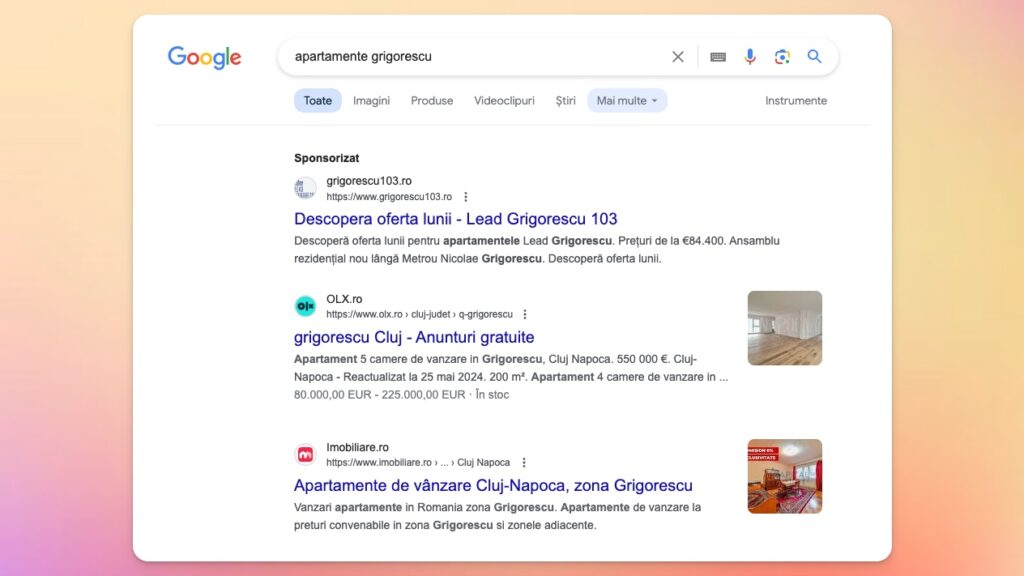
Google Ads search campaigns are extremely valuable in real estate due to their ability to target users with explicit buying or renting intent.
These campaigns are designed to appear when potential clients type relevant keywords into Google, ensuring your ads are seen by the right people at the right time.
Campaign Setup: Choosing the right keywords is essential. Keywords like „buy apartment [location]” or „luxury apartment [location]” can attract users with clear intent. It's equally important to use negative keywords to filter out irrelevant searches that would waste your budget.
Example
If you're targeting people looking to buy an apartment in Sinaia, then searches like „apartments Sinaia” or „2 bedroom Sinaia” may be a good fit for your goals.
In this case, you can add negative keywords such as „rent”, „hotel”, „airbnb”, etc. Identify all variations related to short-term rentals or hotel stays to avoid attracting people searching for accommodation for their next vacation.
Ad Optimization: Ads should be direct and informative, providing essential details like location, price, and the unique selling points of the real estate project. Clear calls to action, such as „Schedule a Viewing!” or „Explore Available Offers”, can drive clicks and conversions.
Tracking and Measurement: Using conversion tracking features and integrating with Google Analytics allows developers to monitor ad performance and adjust campaigns based on results. This is vital to ensure that your advertising budget is being spent efficiently and that the leads you generate are high quality.
4. Display Campaigns and Their Role in Generating Interest

Google Ads display campaigns play an essential role in building brand awareness and reaching a wider audience. These campaigns use powerful visuals and compelling messages to spark interest and curiosity among potential buyers or tenants.
Effective Targeting: Using advanced targeting options, display campaigns can reach people based on their browsing behavior, interests, and even demographics. For example, targeting people who have recently visited real estate or interior design websites can increase the chances of attracting individuals interested in a modern, urban lifestyle.
Creative Ad Design: Visual ads need to be attractive and convey key messages quickly. Using high-quality photos of real estate projects or properties, paired with concise messaging, can make the difference between an ad that captures attention and one that gets ignored.
Analysis and Optimization: Monitoring display campaign performance is crucial for understanding their impact. By analyzing engagement and conversion data, developers can fine-tune creative elements and targeting to continuously improve results.
5. Demand Generation

Similar to Facebook ads, Demand Generation campaigns allow for detailed targeting. However, Google's platform offers even more precise targeting capabilities, using data from browsing behavior, search history, and YouTube activity. This means you can reach people who have already shown interest in purchasing a property.
Ads can appear across various platforms within the Google ecosystem, including Gmail, YouTube, and Google Discover Feed. This ensures high visibility and helps you reach diverse audiences at different times of day.
Ad Types
In Demand Generation campaigns, you have three main ad formats available: Single Image, Carousel, and Video.
Single Image Ads: These are simple yet effective ads that use an attractive image and short copy to capture attention. They're ideal for showcasing stunning property visuals or highlighting a specific advantage of the residential development.
Carousel Ads: These ads let you feature multiple images in a single ad that users can scroll through. This is an excellent way to showcase different aspects of a property — such as interior and exterior views — or to present multiple offers within a single campaign.
Video Ads: Recently added, these video ads are highly effective for telling a story or offering a virtual property tour. Videos capture attention better and can communicate complex details in an engaging and memorable way.
6. YouTube and Video Ads: Visual Impact in Real Estate
Video advertising, especially on platforms like YouTube, plays a vital role in real estate marketing. Videos are an excellent medium for showing potential buyers or tenants the advantages of living in a particular complex or neighborhood.
Creating Engaging Video Content: It's essential to produce video content that captures attention and quickly communicates the project's values and benefits. A video tour of the complex, interviews with current residents, and a showcase of local amenities can add a personal and persuasive dimension that text or static images simply can't match.
YouTube Targeting Strategies: Using YouTube's advanced targeting features allows developers to show their ads to people who have watched similar content or have interests in real estate or urban lifestyles. This increases ad relevance and, consequently, the likelihood of conversion.
Measuring Impact: Integrating YouTube Analytics is crucial for understanding how your videos are performing. This helps identify which content elements resonate best with the audience and enables campaign adjustments to optimize engagement and conversions.
7. Campaign Optimization and Conversions
Optimizing Google Ads campaigns is an ongoing process, essential for maximizing the efficiency of every dollar invested. For real estate agencies and developers, where the stakes are high and competition is fierce, every element of the campaign must be carefully monitored to ensure the best results.
Building a high-converting landing page: The landing page should be designed with the specific goal of converting visitors into leads or clients. This means using clean design, direct messaging, and a simple, accessible contact form. Ensuring a mobile-friendly experience is also critical, given that a growing number of users begin their searches on mobile devices.
Data Collection and Analysis: Using analytics tools to track user behavior on landing pages and ads can yield valuable insights about what works and what doesn't. A/B testing different page elements — such as CTAs or images — can help identify the most effective versions for boosting conversion rates.
Real-Time Campaign Adjustments: Based on the data collected, campaigns can be adjusted in real time to improve performance. This may include shifting budgets, pausing underperforming ads, or experimenting with new ad groups to test different approaches.
8. Conclusion
Google Ads offers an extensive range of tools and strategies that can radically transform how real estate projects and agencies are marketed. From search campaigns to remarketing and video ads, each tool plays its part in attracting and converting leads. Continuous campaign optimization is essential to ensure that your online advertising investment delivers strong, sustained returns.
For real estate developers, effective implementation of these campaigns can mean the difference between a successful project and one that never reaches its potential. Experimentation, continuous learning, and adapting to changes in consumer behavior and technology are essential for staying competitive in this dynamic market.